
5 Surprisingly Advanced Applications for Cast Gray Iron: An Old School Material Meets New School Technology
Gray cast iron has a reputation for being dependable, practical, and everywhere. It is the material behind countless engine blocks, pump housings, brake components, and machine bases. But some of its most impressive work happens in places most people would never think to look.
At Acme Foundry, we know gray iron is more than a traditional casting material. Its combination of compressive strength, castability, thermal stability, wear resistance, and vibration damping makes it a smart choice for specialized products across demanding industries.
Here’s a look at five uniquely advanced applications that show just how versatile gray cast iron still remains, even amongst all of the more advanced materials developed in the 21st century.
1. Telescope Mounts and Precision Imaging Equipment
A high-powered telescope is only as accurate as the structure holding its optics. Even a tiny vibration can blur an image, distort measurements, or compromise data collected from distant objects.
That is where gray cast iron can excel. The graphite flakes in its microstructure help dissipate vibration far more effectively than many steels. In some applications, gray iron can damp micro-vibrations up to 10 times better than steel. That damping capacity helps keep sensitive imaging equipment stable when it is tracking objects millions of miles away.
Gray iron also offers excellent dimensional stability. Once properly cast, machined, and stress relieved, it can hold its shape through changing temperatures and long service periods. For telescope mounts, optical benches, and precision positioning systems, reliable stability matters just as much as strength.
2. Glass Bottle and Container Molds
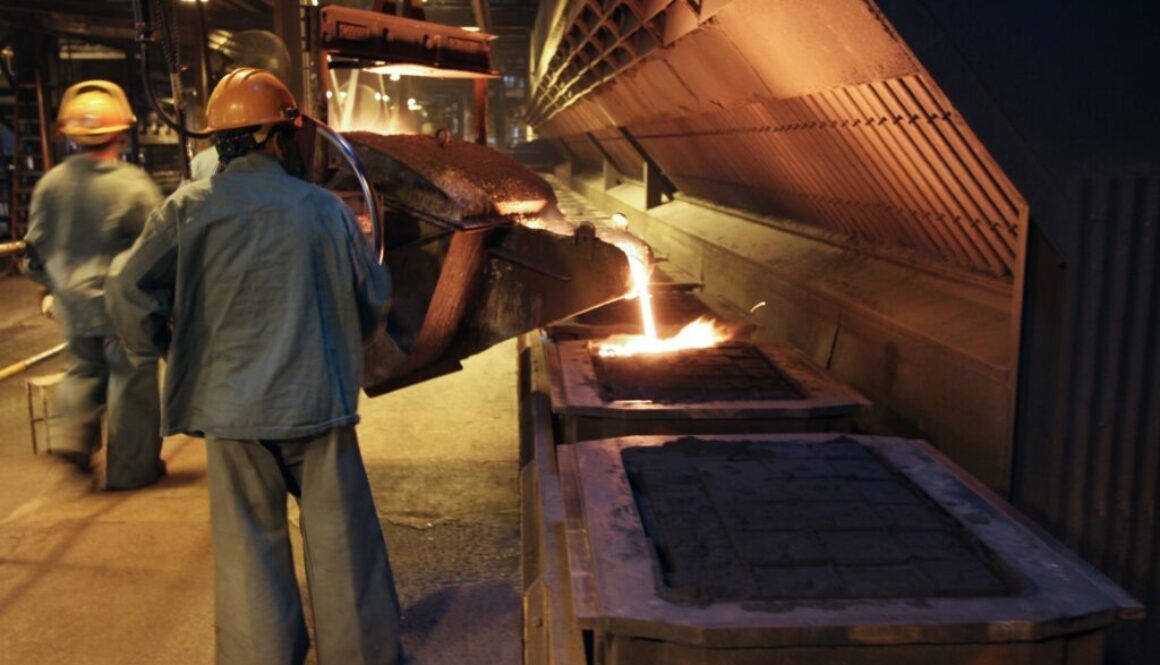
Just like sand molding, glass manufacturing involves extremely high temperatures, rapid production cycles, and tight dimensional requirements. Molds used to form bottles, jars, and other containers must withstand repeated thermal cycling while producing consistent surfaces.
While today there are more advanced alloys for mold making and tooling, gray cast iron remains a reliable and cost-effective material option for many applications.
It’s not all about low cost either. Gray iron is still used for glass-molding equipment because it manages heat and compression extremely well. Its thermal conductivity helps move heat away from the newly formed glass, while its mass contributes to stable operating temperatures during high-volume production.
A typical glass container line may produce hundreds of bottles per minute. That means mold components must perform repeatedly without excessive distortion, cracking, or surface wear. Gray iron’s ability to balance machinability, thermal behavior, and cost makes it a practical material in the right tooling applications.
3. Railroad Brake Shoes
Railroad equipment operates under punishing conditions: heavy loads, high speeds, weather exposure, and repeated braking cycles. Gray iron brake shoes have been used in rail applications because the material provides reliable friction characteristics and can tolerate significant heat.
One benefit of gray iron is its graphite structure, which can help reduce the tendency for metal-to-metal adhesion during braking. The material also handles compressive loading well, an important factor when brake shoes are forced against a wheel tread.
Modern rail systems often use alternative materials and specialized composite brake components, depending on the vehicle and operating requirements. But gray iron remains an important example of how a material often associated with stationary equipment can also perform in motion-intensive, safety-critical transportation environments.
4. Industrial Counterweights and Balancing Systems
Some applications need weight, but they also need that weight to fit a precise shape, mount securely, and maintain dimensional consistency. Gray cast iron is frequently used for counterweights in equipment ranging from elevators and cranes to robotics, medical imaging systems, and industrial machinery.
Cast iron has a density of roughly 7.1 to 7.3 grams per cubic centimeter, allowing engineers to add substantial mass without taking up excessive space. Because it is castable, designers can incorporate mounting holes, ribs, bosses, pockets, and complex contours directly into the part.
In a robotic arm or precision machine, a properly designed counterweight can reduce motor load, improve positioning accuracy, and lower energy consumption. It is a simple concept, but the casting itself may be highly engineered.
5. Machine Beds for Microchip and Semiconductor Manufacturing
Microchip and semiconductor manufacturing includes some of the most advanced, high-precision processes of any industry. The machines that etch nano-scale transistors onto silicon microchips (and the ultra-precise CNC mills shaping aerospace components) sit on massive machine beds. Given gray iron’s outstanding vibration damping characteristics, it’s an ideal material choice for these applications.
At the nanometer level, nearby vibrations or even objects dropped on the factory floor can ruin a batch of microchips. Gray iron provides a rigid, vibration-deadening foundation that also doesn’t expand or warp with slight temperature changes like some competing alloys.
A Material With More Range Than Most Expect
Gray cast iron has remained relevant because it solves difficult engineering problems without unnecessary complexity. Whether it is damping vibration beneath a telescope, controlling heat in a glass mold, creating a resonant industrial bell, or balancing advanced machinery, gray iron brings a unique set of properties to the job.
At Acme Foundry, we help customers turn those material advantages into castings built for real-world performance. Sometimes the best casting solution is not the obvious one.